
The rainmaker's secret
Prologue: The Last Platform
Ta-da!
The sound crackled through the platform’s speakers, that familiar clanging of the Indian Railways before every announcement, as if the station itself were waking up.
“May I have your attention please! 12181 Calcutta Express from New Delhi to Calcutta, via Rajasthan, Bhopal, and Hyderabad, is ready to depart from platform number 4. Wishing all passengers a comfortable and safe journey”.
The announcement echoed through the sleepy station. It was a quiet evening. Very late at night, perhaps! Fewer travellers than usual, and a sense of calm lingered in the dimly lit corners. Vendors loitered beside their carts, some leaning on their elbows, hoping for one last sale before departure. A thin veil of smoke drifted through the air, mingling with the scent of chai and warm biscuits.
A young boy wove his way through the station, carrying a battered metal kettle in one hand and a basket of toast biscuits in the other. His voice rang out with the enthusiasm of someone who needed every sale.
“Hot-tea! Hot-tea! Anybody want fresh tea?”
The boy couldn’t have been more than ten or eleven. His shirt hung loosely from his thin frame, patched so many times that it seemed stitched together from different lives. Yet his eyes burned with an energy that refused to surrender to hunger.
His hair stuck out in every direction, a little curly, as though he had run his fingers through it a hundred times that day. A streak of soot marked one cheek, but his smile remained stubbornly intact.
He had beautiful dimples!
But there were few passengers, and even fewer who stopped to buy. The boy’s eyes darted from face to face, seeking any sign of interest, his small frame tense with worry. Every unsold cup meant his family would go hungry tonight. His mother and newborn sister waited at home, and he knew his earnings would be the difference between a meal and empty plates.
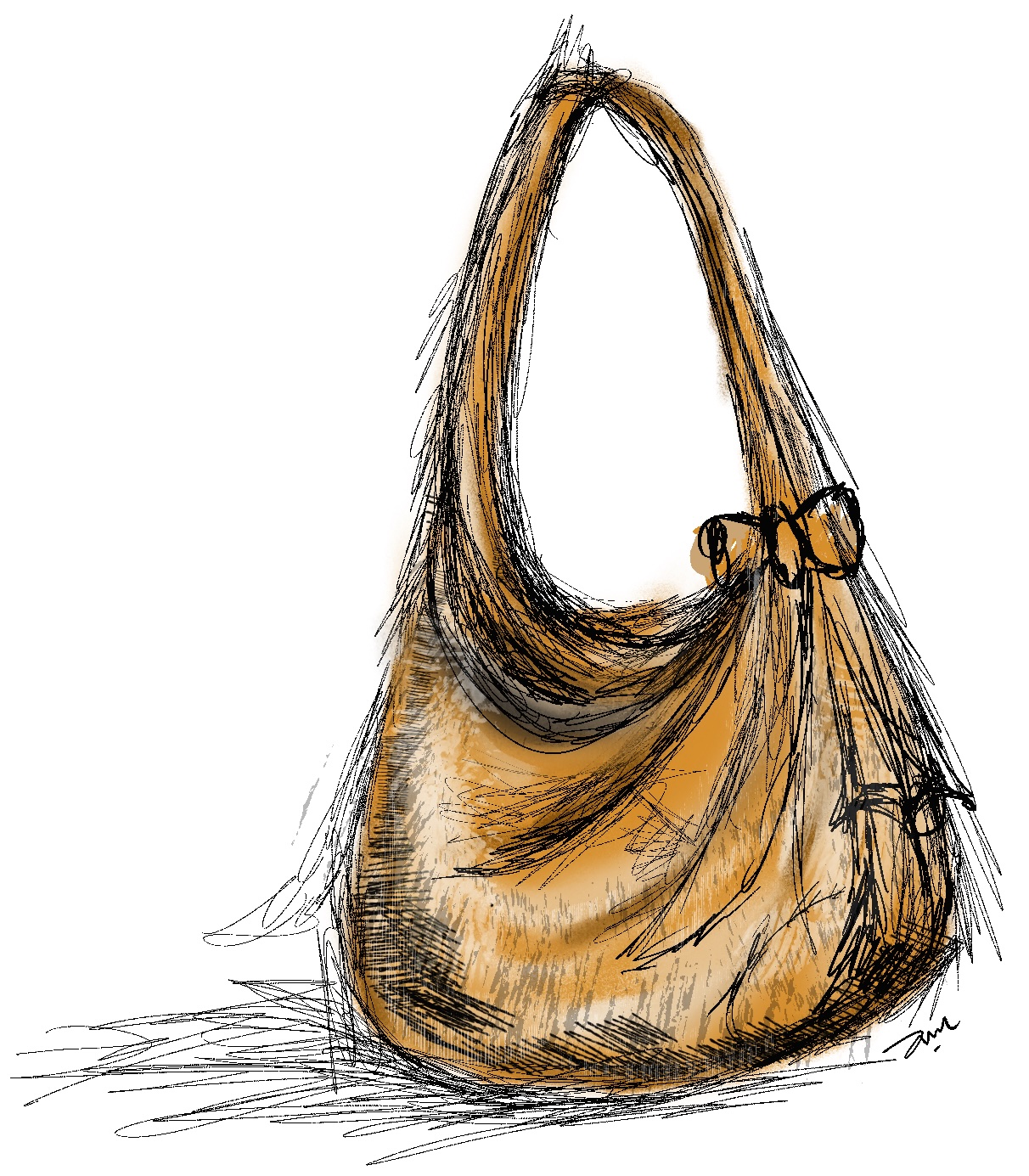
As he walked down the platform, he spotted a lone figure on a bench. A sanyasi – a wandering monk, dressed in simple robes, his skin weathered by sun and wind. The man was asleep, his head tilted onto his shoulder, using it as a makeshift pillow. His hands rested on his thighs; palms upturned as if in silent offering. Next to him lay an orange jhola bag with a worn-out shoulder strap, folded and frayed, the telltale signs of a life lived in transit.
The boy hesitated at first, but his desperation nudged him forward. He approached the sleeping monk and cleared his throat, hoping to wake him gently.
“Babba” he murmured, “have some tea. It’s fresh and hot – you need it“.
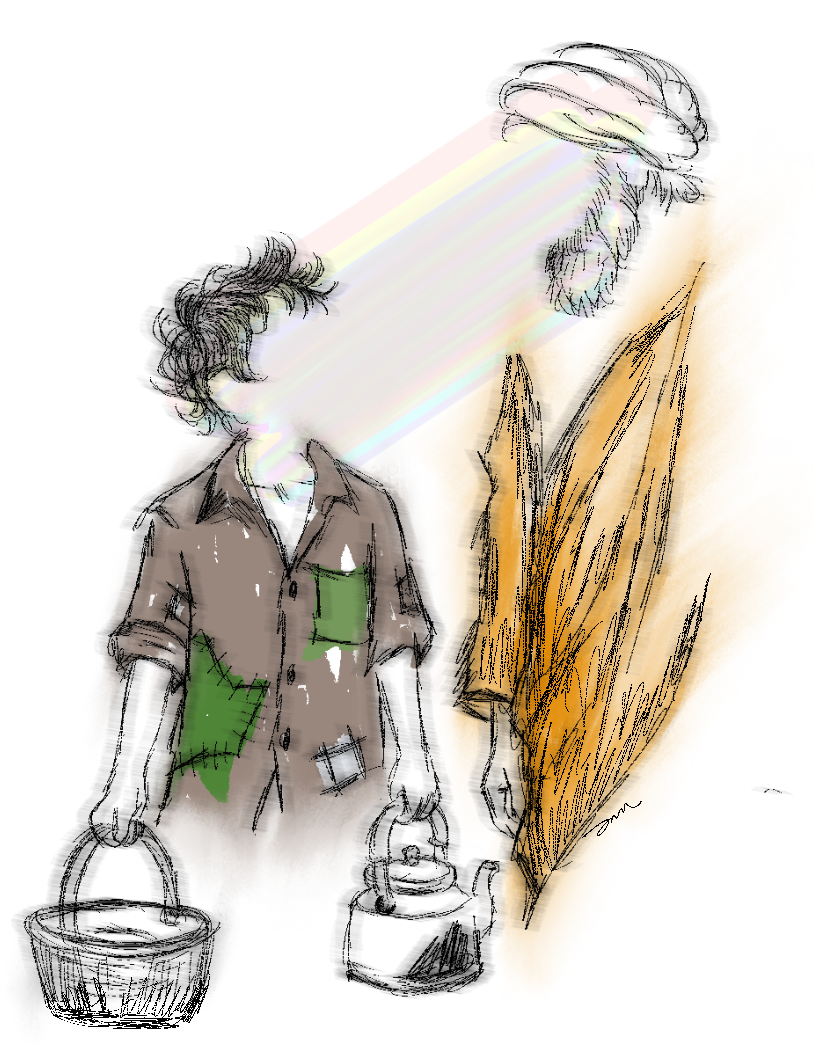
The sanyasi stirred, slowly opening his eyes. As he fought through the weight of exhaustion, for the briefest moment, it felt as though the universe unfolded before him. He saw stars being born from clouds of dust and collapsing into darkness. Galaxies drifted apart while others spiralled together. Light travelled across impossible distances and bent around unseen forces, carrying stories from the past into the future. Time itself seemed less like a straight line and more like a river folding back upon itself.
Then the vision faded. The stars disappeared. The galaxies fell silent. All that remained was a young boy standing before him with a kettle of tea and a hopeful smile.
He gave a slight shake of his head.
“Child, thank you, but I cannot pay you. I have no money” he said softly, his voice as calm as the first light of dawn.
The boy hesitated, glancing at his small basket of tea and biscuits. His face reflected a mix of worry and resolve. He looked at the Sanyasi, taking in his worn appearance, and then shrugged, his sense of duty stronger than his need to earn.
“It’s okay,” he said, offering the cup again. “You look like you need it, Babba”. Besides, he added with a faint smile, “no one else is buying my tea. Maybe it’s better you have it than let it go to waste”.
The sanyasi’s face softened. He reached into his jhola and pulled out a crumpled ten-rupee note, the last money he possessed. For a moment, he stared at it as though weighing something far beyond its value. Then he pressed it gently into the boy’s hands.
“Take this, I was saving it to buy my ticket” he said quietly. “Use it to help your family”.
The boy looked down at the note, a mix of surprise and gratitude in his eyes.
“But, Babba… what about you? How will you buy a ticket?”
The Sanyasi smiled.
“I’ll find my way, child. Kindness has a way of guiding us where we need to go”.
He gestured for the boy to sit beside him and gently ran a hand through his hair as though blessing him.
“And sometimes,” he added, gazing briefly toward the train waiting in the darkness, “the journey finds us long before we find it”.
“Tell your mother and sister I send my regards” he said, his voice carrying the warmth of a thousand sunsets.
[ P A U S E ] The boy blinked.
“How do you know about my sister and my mother, Babba?” the boy’s eyes widened in surprise.
“Just remember, child, don’t let go of school. You have a bright future waiting for you.” the monk said with a knowing smile, gently running a weathered hand through the boy’s hair.
The boy fell silent, caught between awe and confusion, his small hands still clutching the note. At that moment, the speaker crackled again.
“Attention, please! The train on platform 4 is now leaving for Calcutta…”
“Is this the one to Calcutta, child?” the monk asked, turning his head toward the platform edge. His tone was casual, but his eyes were intent.
“Yes, Babba” the boy replied, still mystified by the monk’s uncanny intuition.
“Do not worry. By the time you reach home, your basket will be empty. Blessings to you.” the sanyasi whispered, leaning forward as if bestowing a blessing upon the boy.
The boy blinked in disbelief, a surge of hope filling him as he clutched his kettle. He didn’t know why, but something in the monk’s words felt like a promise.
“Thank you, Babba! I… I have to go!” he stammered, scrambling to his feet.
With one last look at the monk, the boy dashed off into the crowd, his voice calling out again, “Hot-tea! Fresh tea!” and for the first time that night, people began to turn their heads, a few hands raising, signalling for a cup.
As the train began to rumble to life, the monk rose from his seat, gathering his humble belongings. He had some fruits, a bag of rice, a towel, and couple of letters and a pen. All those that he has collected from visiting different houses.
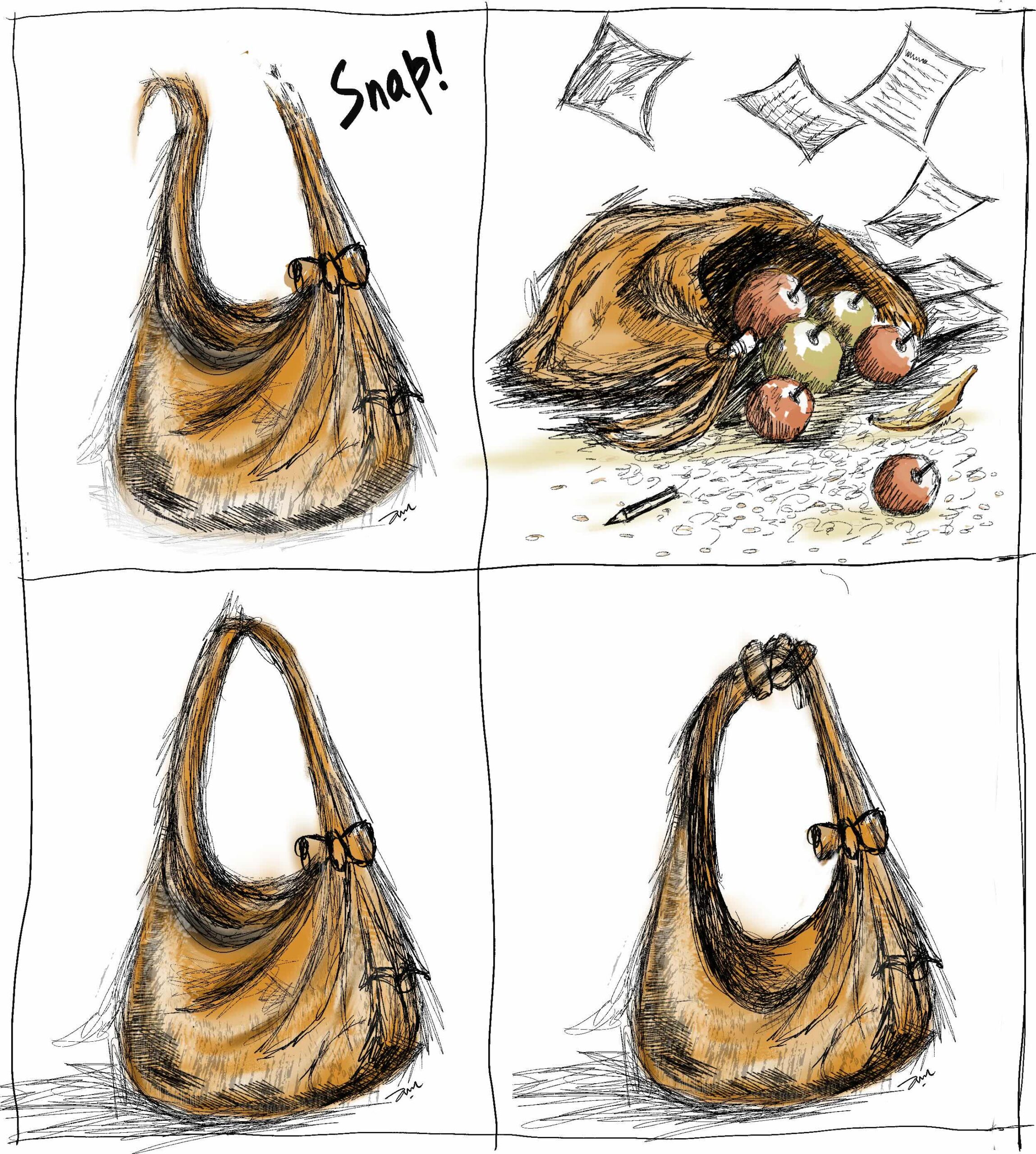
He walked towards the edge of the platform, feeling the low hum of the engine vibrate through the soles of his feet. The train had already begun to move, slowly at first, then gathering momentum. Clutching his orange bag – worn and fragile, with its strap barely holding together, he took a deep breath and started to run, his feet pounding against the platform as the train picked up speed.
It was a long train, stretching out before him like a metal serpent disappearing into the darkness ahead.
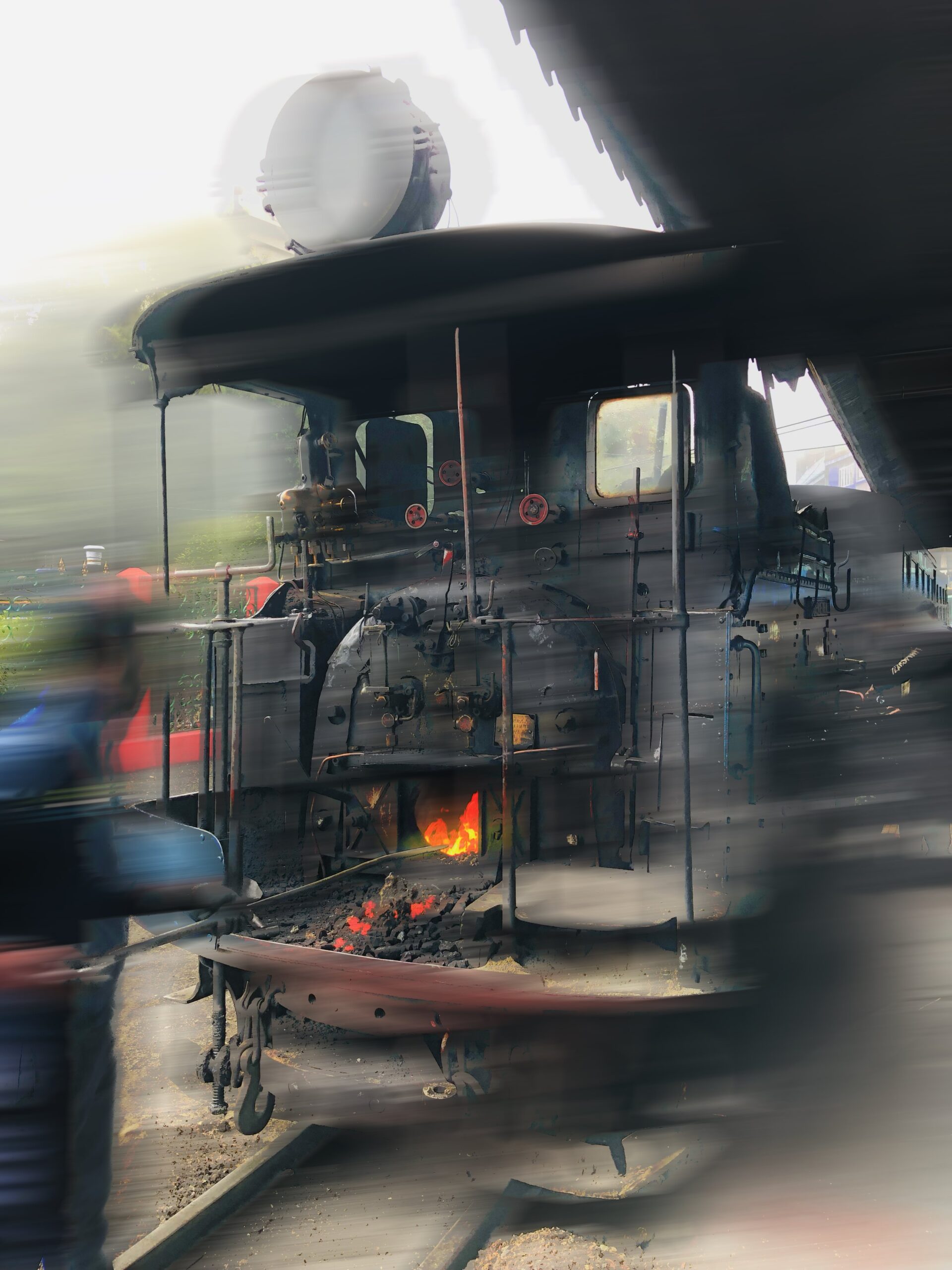
Twenty-one compartments, including eight cargo carriages, and a coal engine at the very front, belching plumes of steam into the evening air. Chuff-chuff, chuff-chuff! The train’s horn let out a deep, resonant blast, reverberating across the station, urging him to move faster.
At the very back of the train, an open carriage loomed. A rusted metal platform surrounded by railings, its paint weathered to a dull, peeling red-brown. Exposed to the elements, it had an unpolished look, bare and unadorned, a lonely corner not meant for the general public.
The sanyasi gripped his bag tighter, eyes fixed on the back platform. He had no ticket in hand, no reservation in his pocket. All he carried was the faith that, somewhere in those 21 compartments, he would find a place to rest, a space to listen, and perhaps a chance to share whatever stories and secrets life had in store for him.
With a final burst of energy, he lunged forward, his hand stretching his handout for the cold metal railing, heart pounding..
Snap!
All of a sudden, the strap of his worn-out jhola bag gave way, and everything spilled across the platform. Fruits tumbled and rolled in all directions. Some landing on the tracks, others disappearing between the feet of startled onlookers. The rice packet burst upon impact, sending a cloud of grains scattering like dust in the wind. The letters, both filled with ink and still blank, fluttered wildly before settling across the ground, like pages torn from his past.
The sanyasi’s heart dropped, but instinct took over. He scrambled to collect the scattered letters and his pen, his fingers hastily grabbing at the broken pieces of his life now strewn across the cold concrete. He stuffed them back into the remains of his jhola, clutching the frayed cloth tightly. The fruits and rice were forgotten.
With the train gaining speed, he was already out of breath, yet he felt himself drawn towards it, as though caught in the pull of something far greater than his own will. He couldn’t stop now.
He broke into a sprint, his legs burning, his lungs straining as he pushed himself harder. His eyes fixed on the back of the train, he willed his feet to move faster. In a last desperate lunge, he reached for the railing of the open carriage at the end of the train, fingers closing around the cold metal. With a final, exhausted effort, he threw himself onto the platform, landing hard on the rusty floor.
He was finally on the train.
He collapsed onto the metal, his legs shaking, chest heaving with each laboured breath. A small cut from the rough metal burned on his arm, a trickle of blood tracing its way down to his wrist. But relief washed over him as he realised, he’d made it. He was on the train—though not quite inside. He leaned back against the railing, feeling the vibrations of the tracks through the platform beneath him, letting the relief settle into his bones.
As he caught his breath, he looked back at the platform and saw the rats, already devouring the last of his spilled rice. A whole rat family had descended upon it, their tiny bodies scurrying, their noses twitching with delight as they feasted. The fruits were nowhere in sight, perhaps picked up by passersby, perhaps claimed by the station itself. Strangely, he felt a flicker of happiness seeing the rats and knowing someone, even these small creatures, would be fed tonight. He had provided, even in his loss, a small offering to the hungry.
But it was the letters he was most thankful for. Miraculously, he had managed to save them all, filled and empty alike. He clutched them close to his chest, a tattered collection of words, memories, and blank pages awaiting stories yet to be told.
As he sat there, bruised and bleeding, he closed his eyes and listening to the rhythmic clatter of the train.
The sanyasi realised he had left behind everything that was expendable. All that remained in his possession were his words, his thoughts, and the unspoken purpose pulling him forward on this journey. The fruits were gone.
The train finally left the last corner of the station. Only darkness lay ahead now!
… to be continued
All illustrations, sketches, graphics, and photographs in this work were created or captured by the author. Every visual element is original and handcrafted, with no use of artificial intelligence in its creation.
Compartment no 21
Wait to see what happens next. The train has left the station. Only darkness lies ahead now. And he doesn’t have a ticket.
Grateful for Your Time
Thank you for being here and supporting this journey. May you carry the inspiration, hope, and stories shared here with you always.
Leave a comment
Let us know what you think. Can you relate yourself to this story?
All images, drawings, research, stories, and content are exclusively generated by the authors and are protected by copyright. Unauthorized reproduction, copying, printing, publishing, or sale of any material is strictly prohibited without prior written approval from the copyright holders. Any infringement will be subject to legal action. Thank you for respecting the intellectual property rights of the creators and authors involved in the production of this content.
Acknowledgement of Traditional Custodians
We pay our respects to the Aboriginal and Torres Strait Islander ancestors of this land, their spirits and their legacy. The foundations laid by these ancestors gives strength, inspiration and courage to current and future generations, both First Nations and non-First Nations peoples, towards creating a better Queensland.